

SEO Is Not Dead — Google’s Head of Search Liz Reid Breaks Down 7 Hard Truths
There’s a growing belief that “SEO is over and AI is eating all the traffic.” Many creators feel uncertain about the future, and some believe AI has destroyed organic search forever. But according to Liz Reid, Google’s Head of Search for 20 years, this assumption is far from the truth.
In a detailed interview with The Wall Street Journal, she explained how shifting user behavior — not AI — is driving the biggest transformation in search. Below is a detailed, structured breakdown of her insights.
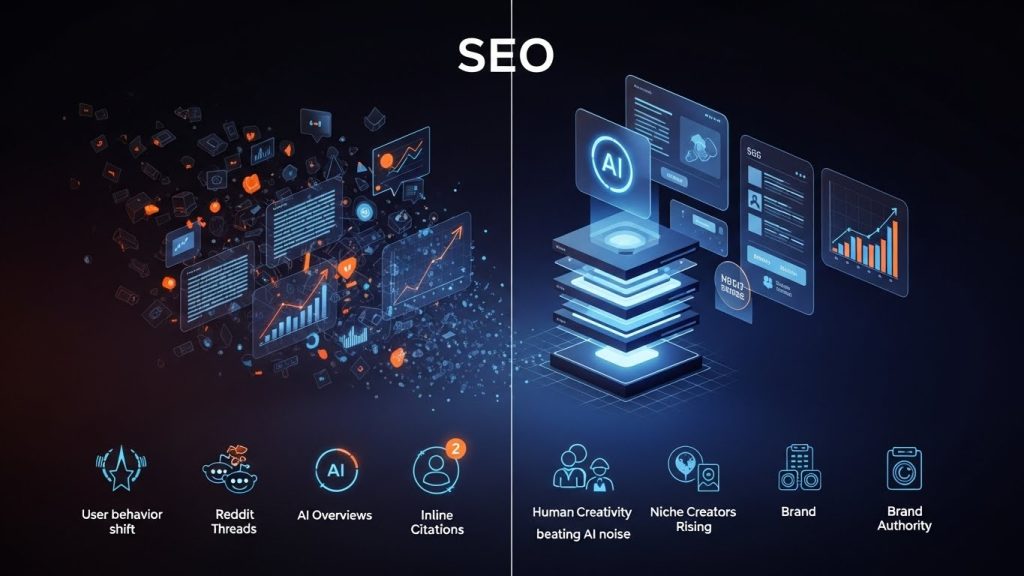
1. AI Isn’t Killing Traffic — Human Behavior Is Changing First
Users today want speed, simplicity, and content formats that fit their lifestyle. Instead of reading long blog articles, people are choosing short-form videos, Reddit threads, podcasts, and YouTube tutorials.
Google is simply adjusting to these new consumption patterns instead of forcing people back to older formats.
- Users prefer short-form, visual, and interactive content over text-heavy blogs.
- Reddit, YouTube, and UGC platforms are increasingly dominating certain topics.
2. Google Ranks What Users Prefer — Not What Publishers Want
Google’s algorithm is shifting to match real user choices. Liz Reid clearly said:
“We have to respond to who users want to hear from.”
If users prefer a Reddit discussion or a niche forum thread, Google will prioritize that over a well-optimized SEO article — even if the article follows every guideline.
- User intent drives ranking more than keyword optimization.
- Trust-based content like forums or personal experiences rank higher if users prefer them.
3. AI Overviews Aren’t Hurting Ads — They’re Increasing Searches
There was a fear that AI Overviews would reduce clicks and damage ad revenue. But the data shows something else: when search becomes more efficient, users search even more.
People conducting commercial or product-based searches still click through because they need to compare options or make purchases.
- AI Overviews have not reduced Google’s ad revenue.
- Easier search journeys result in higher total search volume.
4. Clicks Now Go to Deep, Insightful, Experience-Based Content
The era of shallow, generic SEO articles is ending. AI-generated summaries can handle basic information, so only content offering deep insights or unique expertise stands out.
Google increasingly rewards content that reflects personal experience, real case studies, and specialist knowledge — things AI cannot fully produce.
- Shallow articles lose clicks because AI summarization removes redundant content.
- Deep insights and human expertise perform significantly better.
5. Inline Citations in AI Overviews Are a New Traffic Source
Google’s AI Overviews now cite sources inside the summary itself. Phrases like “According to [Brand]…” can send significant traffic and credibility to smaller publishers.
This is a new era where authoritative, trustworthy content can surface prominently even without ranking #1.
- Inline citations can become a major source of organic visibility.
- Google prefers linking to authoritative, well-researched content.
6. The Internet Is Flooded With AI Garbage — Human Content Wins
Liz Reid acknowledged that AI-generated low-quality content is spreading everywhere. To combat this, Google is prioritizing authenticity — real stories, expert insights, and human opinions.
This means AI-rewritten articles and mass-produced content will decline, while personal, original voices will rise.
- Low-quality AI content is being heavily filtered out by Google.
- Authentic, human-driven content has become essential for ranking.
7. Niche Creators Now Have More Opportunity Than Ever
AI is making search queries more precise and specific. Users are now searching for deeply detailed requirements, which helps niche creators connect with exactly the right audience.
Smaller publishers who struggled with broad keywords can now rank for specialized queries more easily.
- Highly specific queries benefit niche creators and small brands.
- AI-driven search behavior increases visibility for specialized content.
What You Should Do Now: The New SEO Action Plan
Search is changing, but the opportunity is massive for those who adapt. Instead of chasing keywords, creators must focus on delivering deeper, more meaningful value.
Your new SEO strategy should include:
- Build a strong, memorable brand
People trust brands, not anonymous articles. - Add personal experience to every topic
AI cannot replicate your real-life insights. - Match your content to user preferences
Use video, images, or long-form guides based on what your audience prefers. - Focus on niche authority
Specific, laser-focused topics outperform broad ones.
SEO Isn’t Dead — It’s Evolving With Users
SEO isn’t being destroyed — it’s being reshaped by human behavior. Google is following users, not replacing them. The future belongs to creators who understand what people truly want and who can deliver unique value.
If you adapt to this new ecosystem, you’ll thrive — even in the age of AI-driven search.